
A Beginners Guide to Specialty Coffee, Brew guides, Knowledge
How to extract light roast filter coffee

You open a fresh bag. It smells like strawberries and jasmine. You brew it, take a sip and… lemon juice. Or something thin and dry that leaves your tongue feeling like sandpaper.
We’ve all been there. (Yes, us too. Tasting hundreds of coffees a year doesn’t make you immune.)
The culprit is almost always extraction. Below we explain what it is, plus one question that fixes most light roast brews:
Do I need more extraction, or more even extraction?
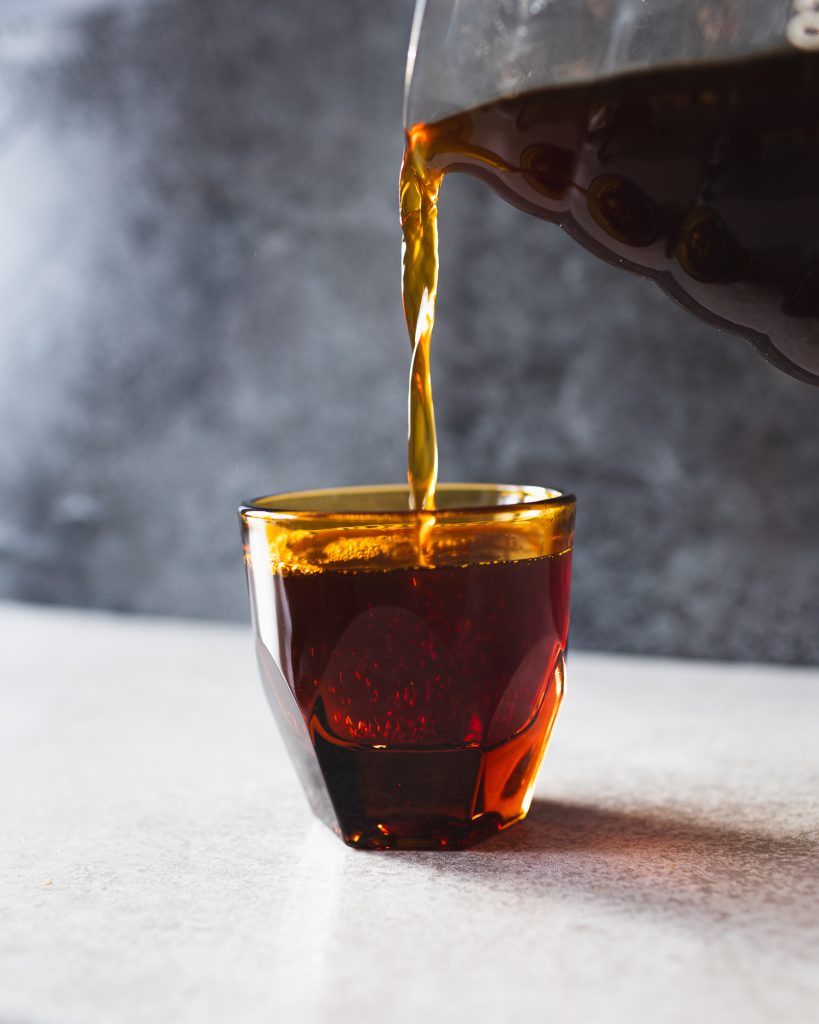
What is extraction, anyway?
Extraction is hot water pulling flavor out of ground coffee. Acids, sugars, bitter compounds and aromatics dissolve into the water, and that’s your cup.
Think of the grounds as a sponge full of flavor. Water runs through, grabs what it can and carries it into your mug.
The catch: not everything comes out at the same speed. Some flavors dissolve fast. Others need more time and heat.
That’s why the same beans can taste:
- sharp and sour, when too little has dissolved
- bitter and dry, when too much (or the wrong parts) has dissolved
- sweet and balanced, when you land in between
Extraction isn’t good or bad on its own. It’s about how much you pull out, and how evenly.
Under-extracted coffee (too little) tastes:
- sour or lemony, with no sweetness behind it
- thin, watery, hollow
- sometimes green, grassy or a bit like peanuts
Over-extracted coffee (too much) gives you:
- bitterness that hangs around
- a dry, rough feeling on your tongue (that’s astringency)
- harsh, sharp edges
Barista Hustle’s Coffee Compass is a handy map for this.
Then there’s the really confusing cup: sour and dry at the same time. That’s not too little or too much. That’s uneven.
Sour or bitter coffee? Ask this one question
When a brew tastes off, it’s tempting to change everything at once. Don’t. Ask this first.
1. Do I need more extraction?
You’re not getting enough flavor out overall.
It tastes:
- sour, with no sweetness
- hollow or watery, even though it smelled great
- like nothing at all, a second after you swallow
The brew:
- runs fast and finishes early
- never stalls or chokes
- leaves a flat, even coffee bed
2. Do I need more even extraction?
Some grounds give too little while others give too much. In the same brew.
It tastes:
- sour first, then dry, rough or bitter at the end
- under and over at the same time
- muddy instead of clear
The brew:
- stalls or chokes out of nowhere
- has a drawdown time that jumps around from brew to brew
- leaves sludge on top (lots of fines)
- leaves a bed that looks uneven, cracked or donut-shaped

Diagnose your pour over in 60 seconds
No gadgets needed. Just your tongue and your eyes.
Step 1: Taste. Pick the closest match:
- Mostly sour, hollow or watery → you probably need more extraction
- Sour plus dry, harsh or bitter → you probably need more even extraction
Step 2: Watch the brew.
- Fast, clean flow → points to more extraction
- Stalling, a muddy bed or a flow that’s different every time → points to more even extraction
Temperature, grind, agitation, ratio, contact time, filters. There are a lot of knobs. Turn one, taste, then decide on the next.
New to pour over? Use our easy V60 recipe as your starting point, then tweak from there.
If you need more extraction
- Make it hotter. Preheat your V60 (or other dripper) and server properly, rinse the filter with hot water and use hotter water. A cold dripper steals heat from the coffee before you’ve even started.
- Grind a little finer.
- Give it a bit more time. This usually happens on its own when you grind finer.
If you need more even extraction
The goal is a smooth, steady flow, so no grounds are overdoing it while others slack off.
- Agitate less. Skip the stirring. A gentle swirl to wet everything is enough.
- Grind a touch coarser. Fewer fines, so the water flows more evenly.
- Pour gently and steadily. Keep the kettle low, use a steady stream and don’t dump the water in.
- Look at your filter. Some papers drain faster than others and change how the fines behave. We wrote a whole post on filters.
The two-brew test (my favorite shortcut)
Not sure which problem you have? Brew the same recipe twice, with one change each time:
- Brew 1: more heat (preheat more, slightly hotter water)
- Brew 2: less agitation (no stirring, a gentler pour)
Taste them side by side.
If brew 1 is sweeter and rounder, you needed more extraction.
If brew 2 is cleaner and less dry, you needed more even extraction.
Two cups teach you more than ten random tweaks. (Bonus: you get two cups.)
So next time a light roast smells like a fruit basket and tastes like a lemon, you know where to start. More extraction, or more even extraction? Change one thing. Taste again.
Gear that helps
- Even grind: Fellow Opus 2 or 1Zpresso ZP6 Special
- Gentle pour: Hario Drip Kettle AIR or Fellow Stagg EKG Pro (sets the temperature too)
- Less agitation: Melodrip
- Better water: APAX Lab Mineral Concentrates
- Going deeper: The Physics of Filter Coffee by Jonathan Gagné
Want fresh light roasts to practice on? Our coffee subscription brings a new Nordic roaster to your door every month.