
A Beginners Guide to Specialty Coffee, Brew guides
How filter paper changes your light roast coffee
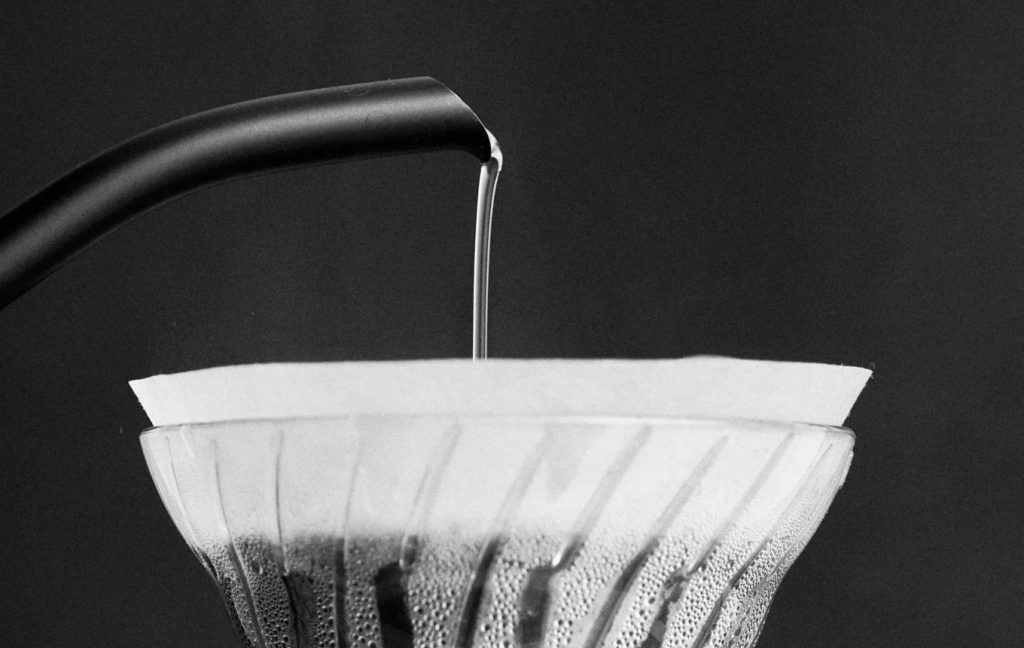
Your recipe worked yesterday. Same beans, same grinder, same kettle. Today the cup tastes thin and sour.
The only thing you changed? You opened a new box of filters.
It happens more than you’d think. A paper filter doesn’t just hold back the grounds. It decides how fast water moves through the coffee, and that changes extraction: how much flavor ends up in your cup, and how evenly. With light roasts, that matters even more.
Below: what paper actually does, how to read your cup, and how to pick and dial in the right filter.
Short answer: yes, filter paper changes the taste. Faster paper means shorter contact time, more clarity and a lighter body. Slower paper means longer contact time, more body and a higher risk of a dry finish. Switching to a faster paper? Grind a little finer to keep the same extraction.
Why light roasts are pickier about paper
Light roasts are denser and less soluble than darker roasts. The good stuff takes longer to dissolve. So you usually push a little harder: water just off the boil, a finer grind, a steady pour.
A finer grind also means more fines, the tiny dust-like particles every grinder makes. Fines clog paper. So with light roasts, the flow of your filter suddenly plays a much bigger part.
Darker roasts work the other way. They’re more porous and extract fast, so the same push-harder approach tips them into bitter and harsh.
Three ways filter paper changes your cup
1. Flow decides contact time
Paper adds resistance. More resistance means slower flow, longer contact between water and coffee, and more extraction. Less resistance does the opposite.
That’s why a new paper can make a familiar recipe taste:
- thin and sour: the water ran through faster and extracted less
- harsh and dry: it ran slower and extracted more, or the coffee bed got uneven
2. Body or clarity
Paper also decides how much oil and how many fines reach your cup.
- More oil and fines: more body (the weight and texture in your mouth), less clarity (how easy it is to pick out separate flavors).
- Less oil and fines: more clarity, lighter body.
So two cups can extract exactly the same and still feel completely different.
3. Even extraction, or not
Even extraction means water moves through the whole coffee bed at roughly the same pace. When a filter clogs, flow slows unevenly and the water finds shortcuts through the bed. That’s called channeling.
The result is a confusing cup: sour at the start, dry and rough at the end. Under-extracted and over-extracted at the same time.
Fast, high-permeability papers help here. They leave more room before the paper chokes, especially when you grind fine for a light roast.
What your cup is telling you
Changed paper and something tastes off? Find the taste, then change one thing at a time. Change three things at once and you’ll never know which one fixed it.
| The cup tastes | Likely cause | Try this first |
|---|---|---|
| Thin, sour, watery | Flow too fast, too little extraction | Grind finer, in small steps |
| Sour start, dry finish | Uneven extraction, paper clogging | Stir or swirl less, then grind a touch coarser |
| Bitter, harsh, heavy | Flow too slow, too much extraction | Grind coarser, or try a faster paper |
| Flat and muddy, no fruit | Lots of oil and fines in the cup | Try a cleaner, faster paper |
| Brew stalls at the end | Fines blocking the paper | Less agitation, or a faster paper |
Six filter papers we stock, compared
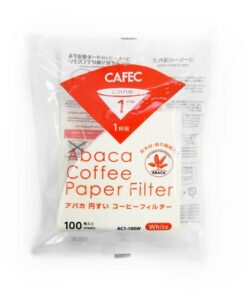
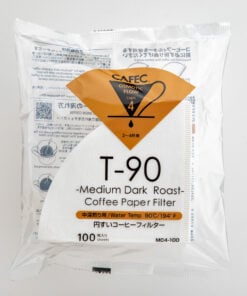
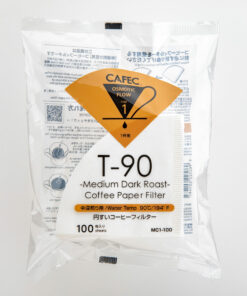


| Paper | Flow | Cup | Fits |
|---|---|---|---|
| CAFEC Abaca+ Cone | Fast, easy to control | Clean, sweet, consistent | Cup 1 and Cup 4 (Hario 01 and 02 size) |
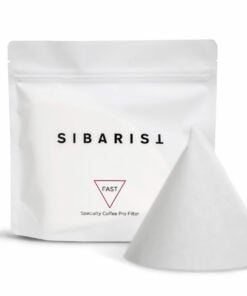
| Sibarist CONE FAST | Very fast | Clean, silky | V60-style cones, 01, 02 and 03 XL (03 XL also fits Chemex) |
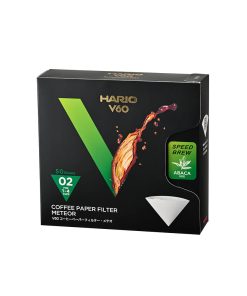
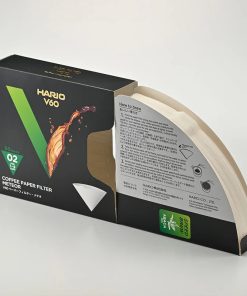
| Hario V60 Meteor | Very fast | Clean, clarity first | V60 02 only |
| CAFEC ABACA | Fast, steady | Lively, clean | Cup 1 and Cup 4 (Hario 01 and 02 size) |
| CAFEC Light Roast | Slower than standard V60 paper | Very clean, juicy | Cup 1 and Cup 4 (Hario 01 and 02 size) |
| CAFEC Medium-Dark Roast | Medium | Balanced, more body | Cup 1 and Cup 4 (Hario 01 and 02 size) |
A note on price: fast papers cost more per brew. Meteor works out at about 7.60 NOK a filter, Sibarist at roughly 5 to 6.40 NOK depending on size and pack, and CAFEC ABACA and Light Roast at under 1 NOK. Worth it if you brew light roasts every morning and keep fighting a stalling brew. Not essential if your cups already taste great.
CAFEC Abaca+ Cone (the one Lene swears by)
If you only try one paper from this list, make it this one. Lene on our team swears by it.
Built for: fast flow that’s still easy to control. CAFEC makes it with a “fine-grained” method: the crepes sit closer together, which gives more surface area and a more even texture. Where CAFEC’s roast-specific papers set the speed for you, Abaca+ lets your grind and pour do the steering.
You’ll notice:
- a quick, even drawdown, brew after brew
- a clean cup with good flow control
Dial it in:
- Coming from standard V60 paper? Start slightly finer.
- Runs fast and tastes thin? Grind finer before you change anything else.
- Stalls at the end? Swirl gently instead of stirring.
Sibarist CONE FAST
Built for: faster, more consistent flow than standard paper, so you can grind finer without the brew stalling. Sibarist’s own material says extraction can be 15 to 40% faster than with common filters, depending on recipe and technique. It’s also the paper Børge on our team uses at home.
You’ll notice:
- a quicker drawdown, often by a lot
- a clean cup with a silky texture
- finer grinds without the brew choking
Dial it in for light roasts:
- Start a little finer than with your usual paper.
- Keep agitation moderate. Fast paper doesn’t make fines disappear, and hard stirring still pushes them into the paper.
- Sour or thin? Grind slightly finer, or preheat your brewer properly, before you add more stirring.
Hario V60 Meteor
Built for: very fast flow. Hario says Meteor lets water through nearly 3 times faster than its standard V60 paper. It’s made from wood pulp, abaca and plant-based PLA, and comes in V60 02 size only.
You’ll notice:
- noticeably quicker brews
- more room to grind finer
- a clean, clarity-first cup, especially with light roasts
Dial it in:
- Think “my filter just got a lot faster.” Your first move is to grind finer, in small steps.
- Still running too fast? Pour slower and steadier.
- Tastes dry or rough? Calm the agitation before you grind much coarser.
CAFEC ABACA
Built for: strength and good flow. Abaca (Manila hemp) fibers let the paper be thinner and stronger than regular wood-pulp paper. It’s the paper used at the Japan Hand Drip Championship.
You’ll notice:
- a steady, smooth drawdown in most setups
- lively, clean cups that suit fruity and floral coffees
- easier flow than many standard papers
Dial it in:
- Start with your normal recipe, but expect to land slightly finer than with slower papers.
- Starts fine, then stalls late? Use less agitation and grind a touch coarser. Fines sinking into the paper are the usual suspect.
- Cup tastes thin? Grind finer before you add more coffee.
CAFEC Light Roast
Built for: light roasts, the other way around. Instead of speeding things up, it’s dense and brews slightly slower than standard Hario paper, so you get a bit more extraction and intensity without grinding finer.
You’ll notice:
- a very clean, juicy cup, since the dense paper catches even very fine particles
- little to no paper taste (we’ve noticed this ourselves)
- a slightly longer brew than you’re used to
Dial it in:
- Start with your normal recipe. No need to grind finer.
- Runs long and tastes dry? Grind a touch coarser.
- Good pick if you’d rather not chase a finer grind on your grinder.
CAFEC Medium-Dark Roast (the slow one, on purpose)
Why a darker-roast paper in a light-roast guide? Because it’s the perfect contrast.
Built for: balance. A crepe texture on both sides, low density and the largest surface area of CAFEC’s three roast-specific papers, so it keeps flowing even with plenty of fines.
Use it when:
- a light roast tastes sharp or thin on fast paper and you want more body
- you want the “slow paper” in the taste test below
Dial it in: start with your normal recipe. Runs long and tastes dry? Grind a touch coarser.
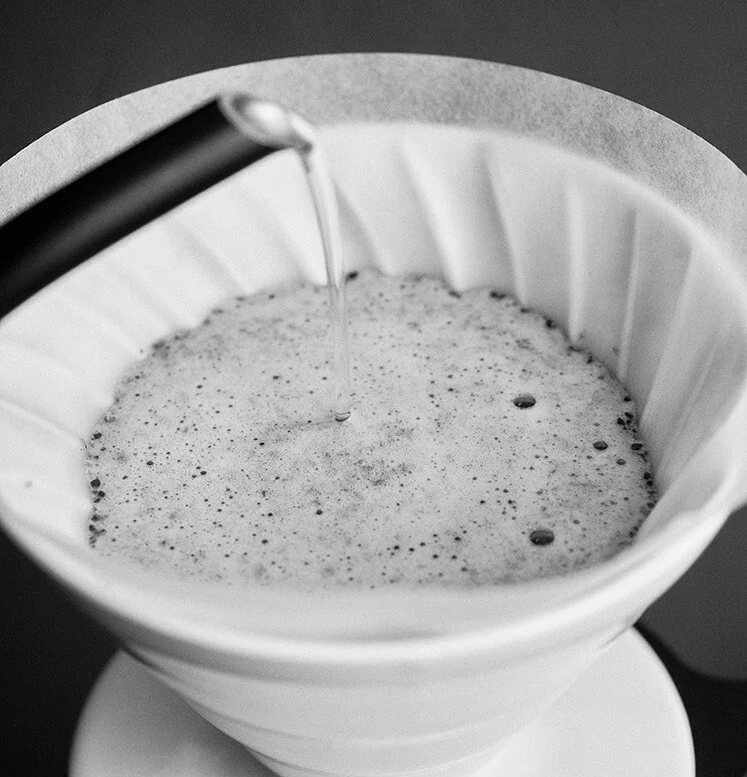
Try it yourself: the three-paper taste test
Reading about it is nice. Tasting it is better. You need about 20 minutes, 45 g of one light roast and three kinds of paper.
- Keep everything the same: same coffee, dose, grind, water and pouring. For example 15 g of coffee to 250 g of water.
- Rinse each paper with hot water first, so you taste coffee, not paper.
- Brew #1 with your usual paper. Write down when the water has drained (the drawdown time).
- Brew #2 with a fast paper: Meteor or Sibarist FAST. Write down the time.
- Brew #3 with CAFEC Medium-Dark Roast. Write down the time.
- Let all three cool for a few minutes, then taste them side by side.
Taste for:
- clarity: how easy is it to pick out separate flavors?
- body: light like tea, or round and heavy?
- finish: sweet and clean, or dry?
You’ll taste how much paper shifts both extraction and texture, before you’ve touched the grinder. (Bonus: you now have three cups of coffee. Share them, or don’t. We won’t judge.)
FAQ
Yes. Paper controls how fast water flows through the coffee, which changes extraction, and how much oil and fines reach the cup, which changes body and clarity. With light roasts and finer grinds, the difference is easy to taste.
There’s no single best one. Our team favorite is CAFEC Abaca+: fast, clean and easy to control. Fast papers like Hario Meteor and Sibarist FAST suit you if you grind fine and your brews stall. CAFEC ABACA is a solid, affordable everyday paper, and CAFEC Light Roast adds intensity without a finer grind. A slower paper like CAFEC Medium-Dark Roast gives more body if your light roasts taste sharp or thin.
Yes. Rinsing with hot water washes out any paper taste and preheats your brewer. Pour the rinse water away before you add the coffee.
White, oxygen-bleached papers usually taste the most neutral. Brown papers can add a papery or cardboard note, so rinse them extra well if you use them.
Partly. A fast paper gives a grinder that makes lots of fines more room before the paper clogs. It can’t fix an uneven grind, though. If your cups keep tasting sour and dry at the same time, the grinder might be the real bottleneck. Have a look at our filter grinders.
All six papers here are cone-shaped. They fit V60-style cones, and the Origami dripper takes cone filters too. A Kalita Wave needs wave filters. For Chemex, Sibarist FAST 03 XL fits. Hario Meteor only comes in V60 02 size. See all filters in the shop.
Need a light roast to test with?
Every month we send a fresh coffee from one of Scandinavia’s best micro-roasters, filter or espresso roast, straight to your door. While your subscription is active, everything you order from the brew shop ships free (filters included).